Beyond the word “textile”
The term textile can flatten many different craft languages into one category. In practice, Indian textile traditions include stitched surfaces, painted cloth, resist-dyed material, devotional imagery, applique construction and domestic cloth reworked for new use.
That diversity matters for anyone collecting, decorating or learning. It changes how a surface is read, what labor sits behind it and how it should be used in contemporary spaces.
Embroidery, applique and painted cloth
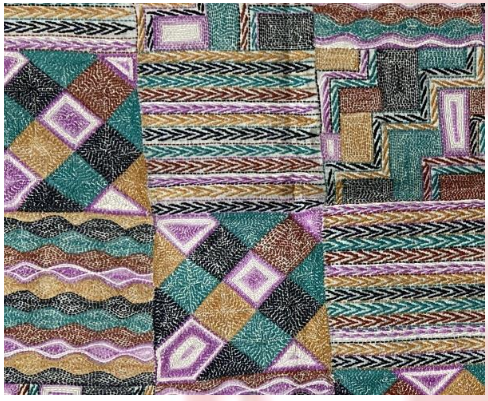
Embroidery traditions such as Kantha and Phulkari build pattern through stitch. Applique traditions create visual impact through layered cut form and contrast. Painted cloth traditions move in another direction entirely, using the textile as a painted surface rather than a stitched one.
When viewers begin to distinguish these modes of making, the collection becomes more legible. It is no longer simply “craft” but a family of techniques with different regional roots and aesthetic priorities.
How Krishnayan bridges history and use
One of Krishnayan’s strengths is that it does not treat museum knowledge and everyday use as opposites. The same craft intelligence that helps document a tradition can also help adapt it into cushions, wall pieces, apparel or table-top objects.
That is where textile education becomes useful for search and for visitors alike: people arrive looking for terms such as Indian textile techniques, but what keeps them reading is clear, grounded interpretation rather than generic keyword-heavy copy.
